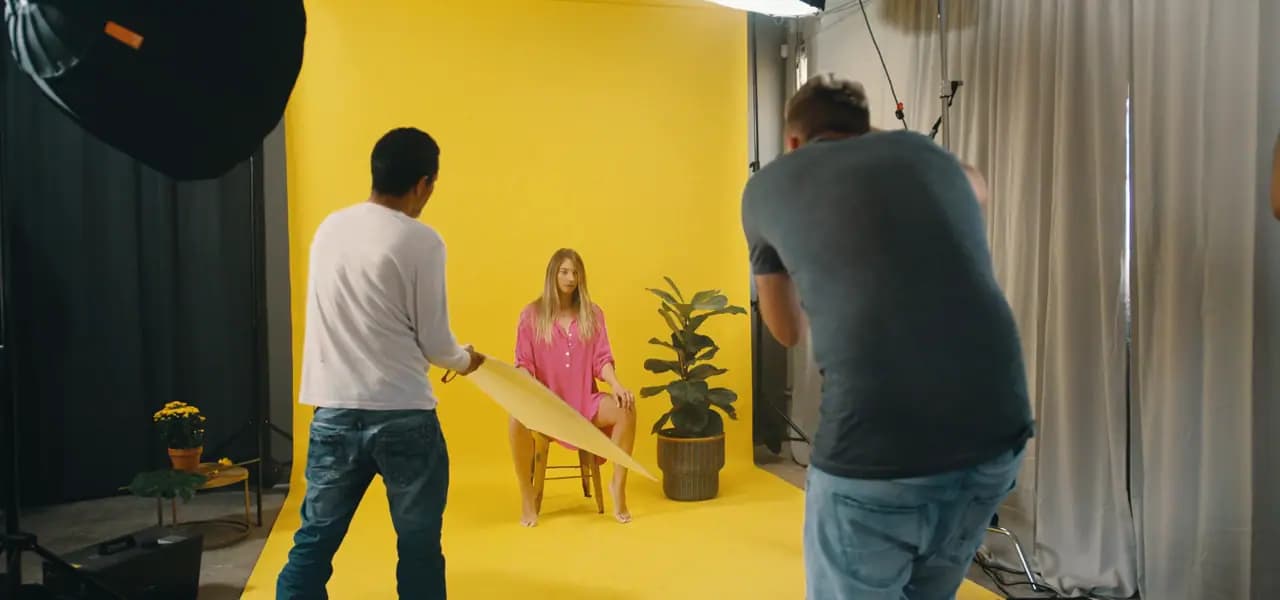
The most expensive mistake in video is not a bad shoot. It is a good shoot planned for one format. The day produces a beautiful wide film, then someone asks for the Reels, and the only way to get them is to crop a vertical slice out of footage that was never framed for it.
Frame wide, protect the middle
A vertical crop takes a narrow slice from the middle of a wide frame, so the subject has to live there: framed with room either side, never pushed to the edge for the sake of the wide composition. It sounds like a constraint. In practice it is a habit, and it costs nothing on the day.
Shoot the vertical-only moments vertically
Some things only work tall: a person talking straight to camera, a product held up close, a walk towards the lens. Those are shot vertically, on purpose, as their own setups, rather than rescued in the edit.
Several openings, not one
The opening is the part of a video that gets tested, so it is the part worth shooting most: the same line in different words, at different energies, from more than one angle. An ad account can only tell you which opening works if the shoot gave it more than one to compare.
Keep the edges clear
Instagram and TikTok lay their own interface over every vertical video: a bar across the top, buttons down the right, and the handle and caption along the bottom. Anything important in those areas is covered for every viewer. Framing that leaves the middle clear on set gives the captions somewhere to go later.
Record sound like it matters
Clear sound keeps people watching more reliably than a beautiful picture does. A video with a clear voice and ordinary light gets watched; the reverse rarely does. On a shoot that feeds social cuts, the microphone is placed for the speaker, not for the wide shot.
What comes out
Planned this way, one shoot day produces a wide film for YouTube and the website, square and portrait cuts for the feed, vertical Reels and TikToks, and a set of ad openings to test, all from the same footage, framed once.